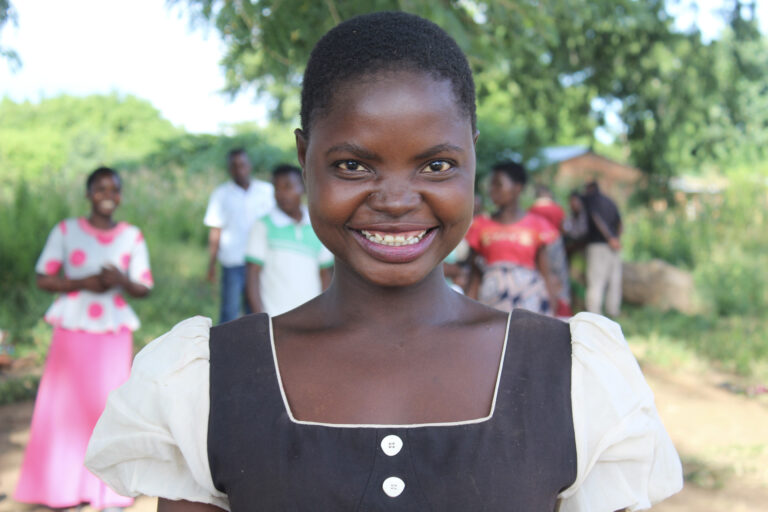
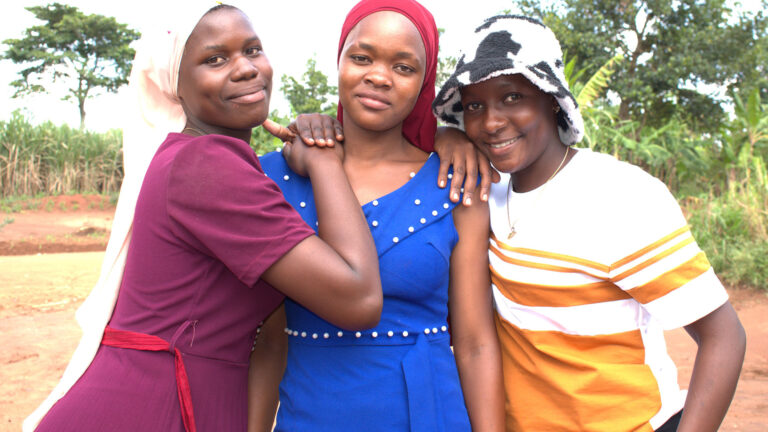
“I have chosen the implant. I need to make sure I finish my school without any disruptions.” Chimwemwe excitedly shows off her implant site to her friends as they gape and awe at how progressive their friend is.
“But are you not worried that you will never get pregnant?” asks one friend as she looks at her with concern. “And what will your parents say?” Chimes in another one.
“Modern contraceptives are reversible. That is what the doctor told me. My parents are supporting me considering how they suffered after my first pregnancy. Contraceptives are for all of us. Family planning is for all of us. N’zatonse!” Chimwemwe responds.
In Malawi, the average age that adolescent girls start having sex is 16, and by age 18, nearly one in three young women have already been pregnant. Adolescent mothers face higher risks of pre-eclampsia and eclampsia and intrapartum and systemic infection than women aged 20-24, and infants of adolescent mothers face higher risks of low birth weight, preterm birth, and severe neonatal conditions.1 In addition to risks associated with early childbearing,2 nearly 20% of girls in the country experience sexual violence before the age of 18. In Malawi, the employment situation is characterized by high rates of youth unemployment and a large informal sector. To address challenges that young people face, the Government of Malawi has called for a renewed focus on youth with multisectoral support from health to economic empowerment.
The Program for Reproductive Health, locally known as N’zatonse, Chichewa for “it’s for all of us,” is a Ministry of Health project funded by the German Cooperation through KfW. The program has been implemented by a consortium of partners since 2014 and is now in its fifth round of funding. The program works with and for young people aged 10 to 24 to deliver combined health, income generation and social development activities to more than 15,000 of Malawi’s most vulnerable youth per month. Age-appropriate information is provided through different communication channels, including interpersonal communication and digital media. PSI Malawi started as the lead implementing partner in 2014, designing and providing outreach services and establishing strategies for reaching youth. In 2022 PSI Malawi’s role evolved to a technical advisory function supporting implementing partners, in line with PSI’s overall strategy to support globally connected, local leadership. Implementation is now led by Family Health Services Malawi, an independent, national organization that spun off from PSI Malawi and remains a part of PSI’s global network.
The program provides services at the community level through mobile outreach teams, community health workers, trained peers and public sector facilities. The integrated services provided at these service delivery points are provided at no cost and include gender-based violence screening and referral, HIV testing services, and STI screening and treatment services. An independent evaluation conducted by management4health found that the program’s mobile outreach approach to providing sexual and reproductive health services can increase contraceptive use, particularly in communities with less access to services due to social, economic, or geographic considerations.3
The program also reaches communities through key stakeholders to support youth as they navigate their reproductive life. These stakeholders include traditional leaders and religious leaders who are breaking the silence around sexual and reproductive health and rights in churches and mosques. Outside sexual and reproductive health, the program provides training to young people on vocational skills and supports income generating activities.
Each quarter, N’zatonse reaches at least 1.2 million young people, and delivers clinical services to 340,000 young people annually. As a result of an increased focus on young people starting in 2021, the percentage of clients ages 25 and younger increased from 42% in 2020 to 65% by December 2024. The contraceptive prevalence among young people within project implementation districts increased from 43% in 2020 to 50% in 2023.
As Chimwemwe mentioned, it is the role of all of us to support young people in accessing contraceptives. N’zatonse—it’s for all of us—they say in Chichewa.