Como trabalhamos
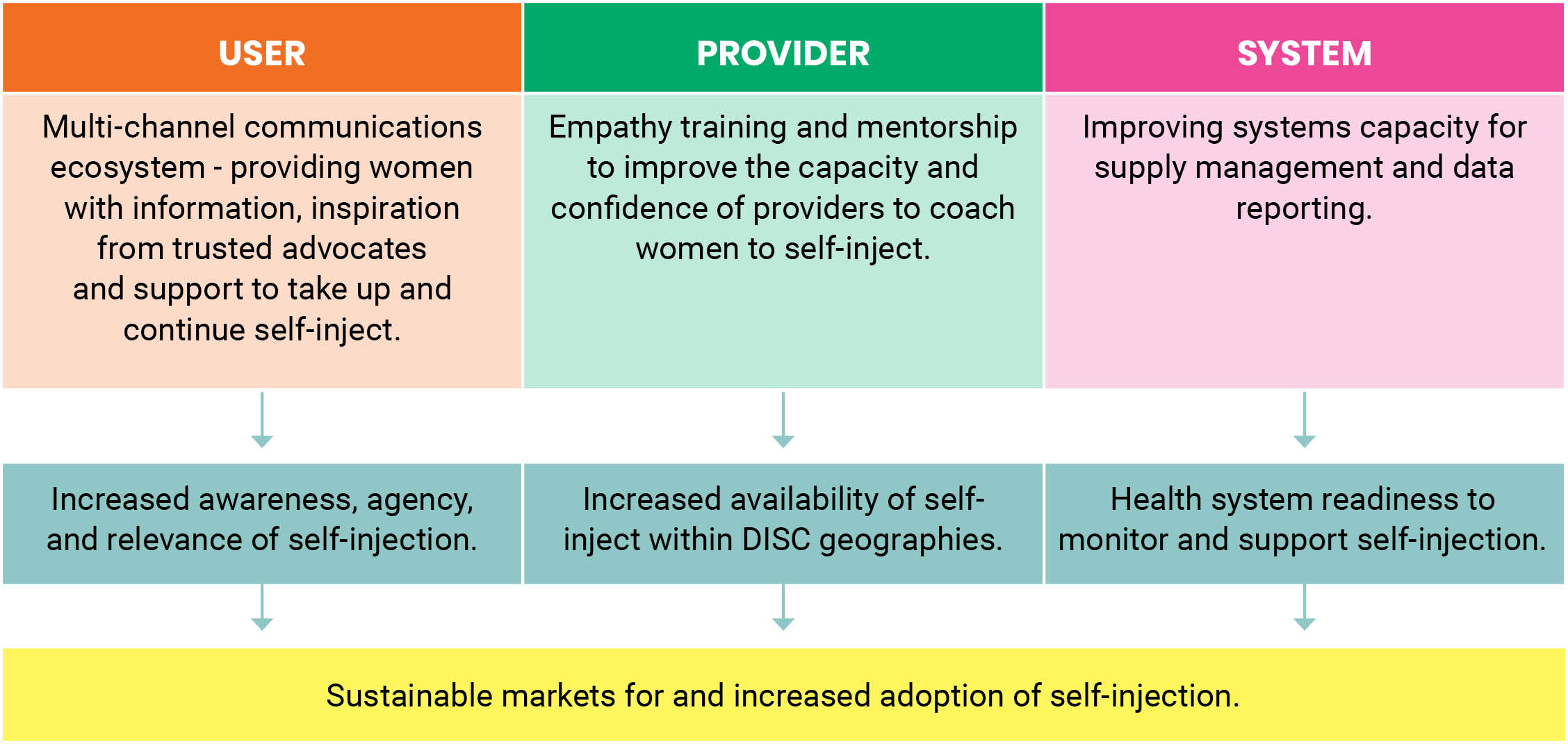
Quando se trata de saúde reprodutiva, a nossa prioridade é fornecer às mulheres opções contraceptivas e apoiá-las nas decisões que tomam sobre planeamento familiar. Conseguimos isto através de intervenções para apoiar a mudança de comportamento dos utilizadores e dos fornecedores, para além do reforço do sistema de saúde fundamental. Uma componente fundamental da nossa abordagem é visar especificamente a auto-injeção (SI), permitindo que as mulheres assumam o controlo da sua saúde reprodutiva. Através de programas de formação inovadores, informação acessível e apoio personalizado, fizemos progressos significativos na promoção e expansão da auto-injeção como um método contracetivo viável, conveniente e privado. A auto-injeção e o fornecimento de unidades para levar para casa podem oferecer às mulheres uma maior autonomia e flexibilidade para gerir as suas necessidades de planeamento familiar nos seus próprios termos.

REFORÇAMOS A CAPACIDADE DOS SISTEMAS DE SAÚDE
EM TRÊS DOMÍNIOS FUNDAMENTAIS
Formação de prestadores de serviços baseada na empatia
Asseguramos que os prestadores de cuidados de saúde não só estão bem equipados com as competências técnicas necessárias para prestar serviços contraceptivos, como também têm formação para abordar os doentes com empatia e compreensão. Isto ajuda a criar confiança e apoio às mulheres, encorajando-as a tomar decisões informadas sobre a sua saúde reprodutiva.
Dados
Relatórios
Gestão da cadeia de abastecimento
Reconhecemos que o acesso consistente e fiável aos métodos contraceptivos é vital. Os nossos esforços na gestão da cadeia de abastecimento asseguram que não há interrupções na disponibilidade de produtos de auto-injeção e outros métodos de planeamento familiar, tornando-os acessíveis onde e quando as mulheres precisarem deles.
Até à data, ajudámos a fornecer mais de 3,000,000 visitas de auto-injeção e apoio ativo 6,000 instalações, assegurando que as mulheres dispõem das ferramentas e dos recursos necessários para administrar com êxito a sua contraceção no conforto das suas próprias casas.
Para saber mais sobre a nossa abordagem, clique aqui:
Ampliar e sustentar soluções SI localizadas através de parcerias estratégicas
Reforçar a capacidade de empatia e auto-cuidado dos prestadores de serviços
Muitos fornecedores hesitam em oferecer a auto-injeção de DMPA-SC porque não têm formação ou capacidade suficientes e, em vez disso, oferecem injecções administradas pelo fornecedor. Desenvolvemos um módulo de aconselhamento SI baseado na empatia que estamos a expandir através de parceiros de implementação. Estes materiais de formação também estão a ser integrados nos currículos de pré e pós-formação e nos guias de aconselhamento para garantir que os prestadores de serviços estão bem equipados para apoiar os utentes a ultrapassar as barreiras à IS.
A NOSSA ABORDAGEM