By Malcolm Quigley, Director of Strategic Partnerships, PSI
Across sub-Saharan Africa, many people walk into pharmacies instead of clinics because they are closer, more convenient and less burdensome to visit. It is time health systems build on what communities already know: the pharmacy on the corner is an extension of the health system and often the true front door to care.
When a mother in Nairobi notices her child has a fever, she walks to the pharmacy at the end of her street. When a young man in Lagos needs contraception, he doesn’t book an appointment. When a woman in Harare wants HIV prevention medication, discretion matters more than bureaucracy. In each of these moments, the pharmacy is the first point of care; not because the public system has failed, but because the pharmacy is simply there.
Sub-Saharan Africa has tens of thousands of community pharmacies. They exist in city centres and market towns, in neighbourhoods underserved by clinics and many remain open long after public facilities close. None required a government capital budget to construct, staff or equip. They are regulated, licensed businesses that have earned deep community trust over years. That relationship is one of the most valuable and underutilised assets in African public health.
In Uganda, 59% of childhood fever care-seeking happens in the private sector; in Kenya 42%, Nigeria 31%, and Tanzania 30%. Across 18 sub-Saharan African countries, more than one in five people turn to a private provider before a public facility.1 This is not a gap in the health system. It is the health system, already working.
A small investment. A large return.
Transforming a pharmacy from a dispensary into a primary health care provider does not require rebuilding it. It requires training, updated protocols, private-sector investment, and a regulatory framework that lets pharmacists do what their skills already equip them to do. PSI is doing exactly this across four programmes right now.
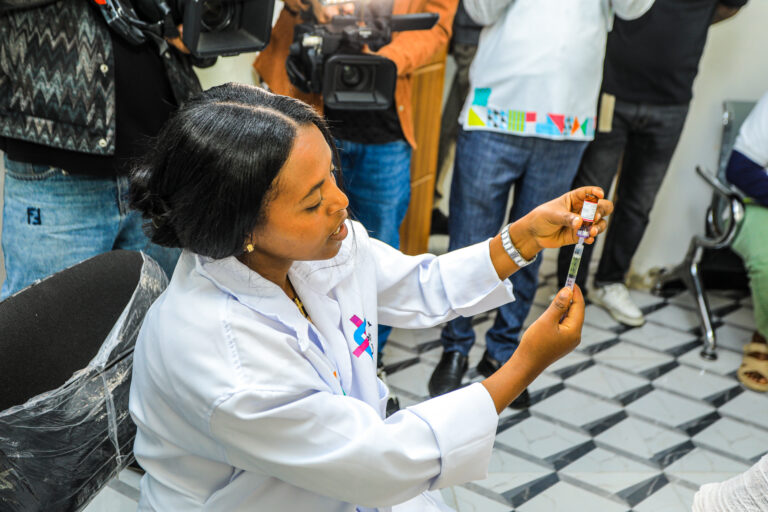
Through our Pharmacy-based Immunisation Delivery (PBID) programme, 360 pharmacists are being trained across 120 pharmacies in Ethiopia, Kenya, and Nigeria, delivering HPV, typhoid and tetanus vaccines, and routine immunization (Ethiopia only).
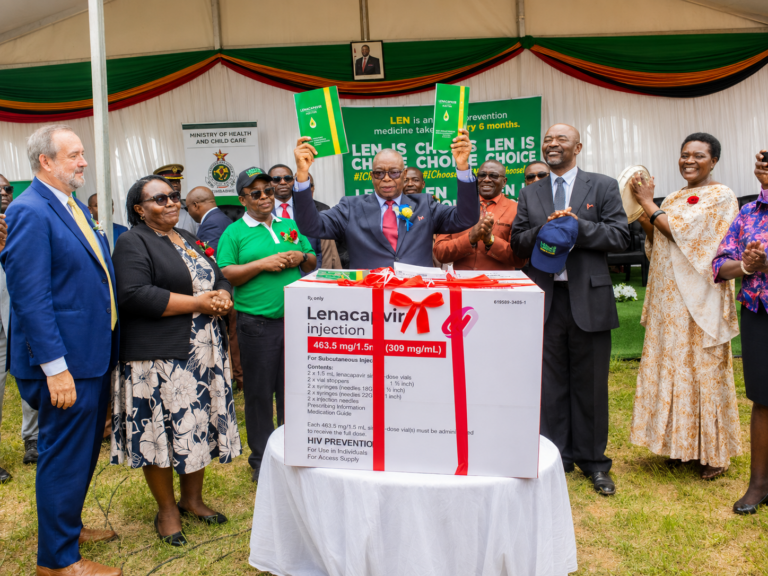
In Zimbabwe, PSI’s PHASE-Z programme operates across 20 pharmacies in five cities2, providing HIV prevention, including oral and injectable Pre-Exposure Prophylaxis (PrEP) services to populations public facilities consistently miss. A comparable Kenya pilot found pharmacy PrEP outcomes matched or exceeded those of public facilities3, with Men who have Sex with Men (MSM) accounting for 22% of clients4.
In Benin, PSI is piloting malaria rapid diagnostic tests in pharmacies where our research has shown that only 13% of people leaving the pharmacy with an anti-malarial actually had malaria. Rapid testing saves clients’ money, reduces misdiagnosis and misuse of valuable antibiotics. Across 13+ countries, PSI’s ACTIVATE programme is building private sector surveillance systems that have achieved data accuracy rates above 90%.
Better for people. Better for governments.
For the person seeking care, a pharmacy offers proximity, privacy, flexible hours, and a familiar face with no transport cost and no waiting room filled with stigma. For populations at the sharpest end of health inequality, that matters. HIV incidence among female sex workers is eight times higher than in the general female population5, yet stigma makes public facilities inaccessible to many. Pharmacy-based models reach them because they require no disclosure or formal registration.
For governments, the stakes are equally clear. Zimbabwe recorded 12,000 new HIV infections in 20246. Without scaled alternatives to facility-based delivery, modelling projects a further 85,000 infections and 30,000 deaths by 20307. Reaching female sex workers through pharmacy-based PrEP delivery alone could avert 40–70% of new infections in the wider population by 20358. Every person who receives a vaccine or HIV prevention service at a pharmacy is one fewer person adding to the queue at a public facility. The health system’s reach expands. The burden on the public system decreases. This is not a replacement for public health infrastructure. It is the layer that makes everything else work better.
The front door has always been open
Across sub-Saharan Africa, pharmacies have been quietly absorbing health demand for decades without fanfare, without significant public investment, and without adequate recognition in health policy. Yet they remain one of the most scalable, trusted, and accessible health platforms available today. That can change but will require more than goodwill.
Regulatory frameworks across the region have not kept pace with what pharmacists are already capable of delivering, and expanding their scope of practice is not a simple administrative step. It is a complex reform that governments and regulators must own and drive. What PSI is working toward is not a workaround. It is a legitimate expansion of the pharmacist’s role: equipping them with the training, protocols and support to provide safe, quality services and embedding them formally within the public health delivery system. It is a practical, people-centred strategy for expanding reach, reducing pressure on facilities, and delivering care where people already seek it.
The pharmacy on the corner should not be seen as an expensive private-sector option available only to those who can pay. It should be recognised as an essential, integrated part of how health care, public and private, reaches everyone. The infrastructure is already there. The trust is already there. The skills are there. What remains is the political and regulatory commitment to walk through the door together.
PSI implements pharmacy-based health programs across sub-Saharan Africa, including PBID (immunization), PHASE-Z (HIV prevention, Zimbabwe), mRDT malaria diagnostics (Benin), and the ACTIVATE malaria platform across 13+ countries. Learn more at psi.org.