By Betty Abera, Project Director, Pharmacy-Based Immunization Delivery
Across Africa, pharmacies are already woven into the fabric of daily life. They are often the first place for advice, treatment, and trusted care, open long after clinics close and embedded within the communities they serve.
But transforming pharmacies into trusted immunization delivery sites requires far more than placing vaccines behind the counter.
It requires building an entirely new frontline immunization workforce.
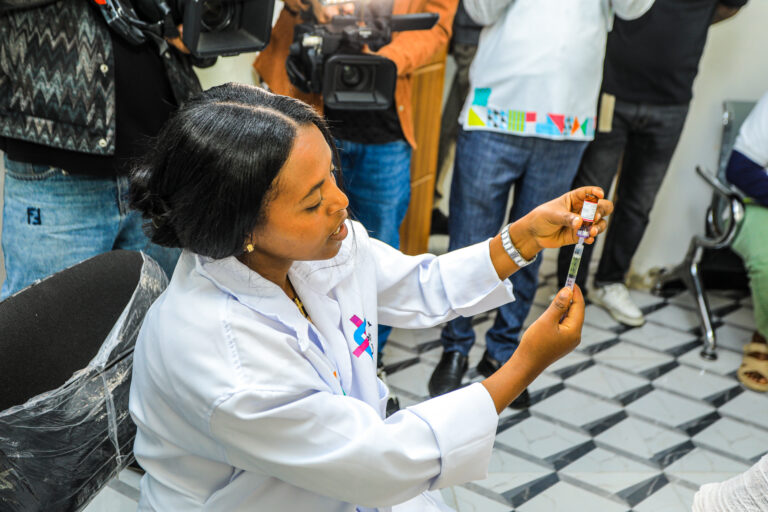
Today, supported by funding from Takeda, PSI and partners are working alongside governments, pharmacy councils, professional bodies, and communities in Ethiopia, Kenya, and Nigeria to do exactly that. Through pharmacy-based immunization delivery (PBID) pilots, we are expanding vaccine access while strengthening the national health systems.
Three pilots are already underway in Ethiopia, Kenya, and Nigeria. Yet behind these milestones lies a much larger story, one about systems transformation, workforce evolution, and the future of integrated primary health care.
Reimagining Who Delivers Care
Globally, pharmacists have increasingly become part of immunization delivery systems. During COVID-19, pharmacies helped accelerate vaccine access in countries ranging from the United States to Australia and the United Kingdom, demonstrating the critical role pharmacy channels can play during public health emergencies.
But in many African countries, pharmacists have historically not been integrated into national immunization strategies.
That raises important questions:
- How do countries ensure vaccine safety and quality?
- What training and certification are required?
- How can pharmacies integrate into public health systems rather than operate in parallel?
- And how can trust be built with communities?
These questions became the foundation of PBID implementation design. Because the goal was never simply to deliver vaccines through pharmacies. The goal was to build a safe, integrated, government-aligned model capable of strengthening immunization systems over the long term.
Building a New Frontline Workforce
Before a single vaccine could be administered, PSI and partners spent more than a year laying the groundwork to ensure pharmacists could safely and effectively function as part of national immunization ecosystems.
That meant building not only technical capacity, but also systems, supervision structures, referral pathways, digital reporting mechanisms, and public trust.
Vaccination is not traditionally part of pharmacist education in many settings. PBID therefore required the development of a multilayer training approach designed to meet both national standards and international best practices.
PSI and partners provided training that includes:
- Pharmacist-tailored immunization curricula
- Ministry of Health immunization certification
- Practical skills training
- CPR and anaphylaxis management
- Supportive supervision and mentorship
- Refresher learning through digital platforms
The model draws from lessons learned globally, including immunization training frameworks pioneered by organizations such as the American Pharmacists Association (APhA), while adapting approaches to local country realities.
Importantly, this model extends beyond pharmacists alone.
Depending on country context, PBID pilots also integrate nurses, community health extension workers (CHEWs), community mobilizers, and referral systems to strengthen continuity of care and alignment with broader primary health care priorities.
Strengthening Systems — Not Creating Parallel Ones
One of the strongest messages emerging from stakeholder engagement has been clear: innovation must strengthen national systems, not compete with them.
This principle has shaped every aspect of PBID implementation.
Cold Chain and Quality Assurance
Vaccines are highly sensitive biological products requiring strict temperature control, monitoring, and handling protocols.
To address this, we equipped participating pharmacies with WHO-prequalified vaccine refrigerators and cold chain management systems designed to align with Ministry of Health standards. Vaccine supply pathways, stock monitoring, and reporting systems are also being integrated into existing immunization structures to preserve vaccine quality and accountability.
Digital Integration and Real-Time Learning
A connected digital ecosystem supports implementation across all three countries.
This includes, digital service delivery reporting, eLearning platforms, supportive supervision tools, routine data quality assessments, and global dashboards for real-time monitoring
We are also integrating pharmacy immunization data into national health information systems, marking one of the first examples in some countries of private sector vaccination data feeding directly into national immunization reporting platforms.
The result is not only better visibility, but also faster learning, adaptation, and accountability.
Designing Around People — Not Just Systems
Technical systems alone do not create successful immunization programs —trust does.
That’s why PSI and partners conducted formative research in each country to better understand:
- How people currently access vaccines
- What barriers they face
- How they perceive pharmacies as vaccination sites
- What would increase confidence and uptake
These insights are now shaping social and behavior change campaigns focused on convenience, trust, safety, and accessibility.
Pharmacists themselves are central to this effort, not simply as providers, but as trusted health professionals already embedded within communities.
A Platform for Integrated Primary Health Care
As implementation evolves, PBID is increasingly becoming more than an immunization pilot.It is becoming a platform for integrated, community-based care.
In Ethiopia, for example, supported by funding from MSD through its Solutions for Healthy Communities global grants program, PBID sites are beginning to incorporate hypertension screening and referral pathways alongside vaccination services, expanding the role of pharmacies within broader primary health care delivery.
This reflects a larger shift happening across global health: moving away from siloed service delivery toward an integrated, community-centered care model. The pharmacy channel offers a powerful opportunity to support that transformation.
What Comes Next
The next phase of PBID will focus on generating the evidence needed to inform policy adoption, financing, and sustainable scale-up.
Key questions remain:
- How cost-effective is pharmacy-based immunization delivery?
- Which populations are most effectively reached through pharmacies?
- What financing models are sustainable?
- How can pharmacy channels best complement existing public sector delivery systems?
- What integrated service packages create the greatest value for communities?
The answers will help shape not only the future of PBID, but also broader conversations about workforce diversification, primary health care integration, and resilient immunization systems across Africa.
Because ultimately, the future of immunization may depend not only on what vaccines are available, but on how creatively, safely, and equitably countries can deliver them.
Want to learn more or partner with us?
Reach out to Malcolm Quigley, Director of Strategic Partnerships, at [email protected] or Betty Abera, Project Director, at [email protected].