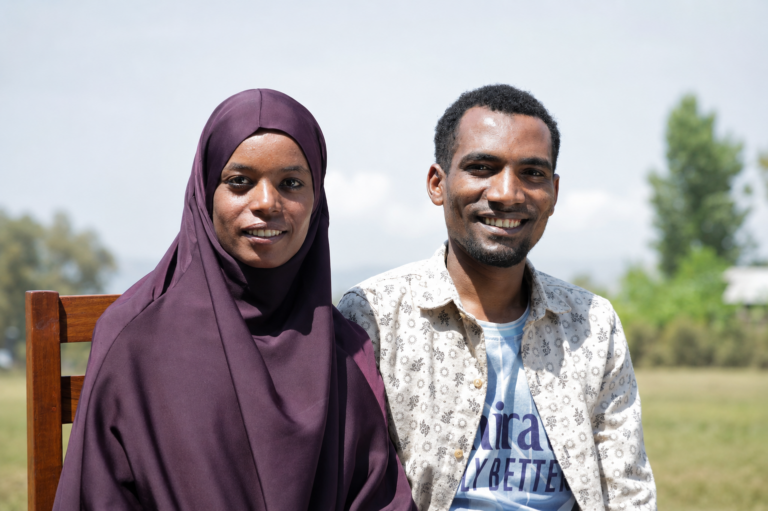
At 18 years old, Wube Belete wanted a different future.
Living with her husband’s family in rural Ethiopia, she had little control over household decisions and few opportunities to make money, dependent entirely on her husband’s limited income. Like many young married women in the area, she faced pressure to focus on domestic responsibilities and begin having children early.
Across Ethiopia, many adolescent girls and young women face similar challenges. Nearly half of girls marry before age 18, and most begin having children before age 20. In rural areas, limited access to contraception and restricted decision-making power can make it difficult for young women to plan their futures or space pregnancies safely. In fact, the unmet need for contraception is nearly three times higher in rural areas than it is in urban areas of Ethiopia. Many begin childbearing soon after marriage, facing heightened health risks, including complications during pregnancy and childbirth such as obstetric fistula, eclampsia, maternal mortality, and poor newborn health outcomes.
To address these challenges, PSI’s A360 program partnered with Ethiopia’s Federal Ministry of Health to implement the Roadmap to Integrating Smart Start in Ethiopia (RISE) program across all regions in Ethiopia. Funded by the Gates Foundation , the program links financial planning with sexual and reproductive health counseling to support young couples planning their families to align with their economic goals.
To date, over 120,000 adolescent girls and young women adopted modern contraceptive methods through the Smart Start model. Moreover, they have strengthened skills in household decision-making, financial planning, and communication.
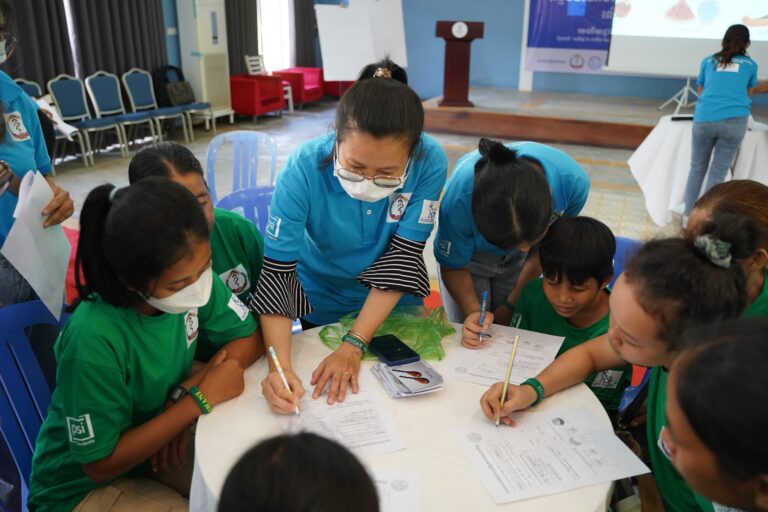
At its core, Smart Start reframes family planning conversations around financial planning and aspiration-setting. Rather than approaching contraception as a standalone health issue, Smart Start creates opportunities for couples to discuss their goals together: continuing education, starting businesses, building financial stability, and deciding when they want to have children. Through guided conversations led by trained health extension workers, couples map shared goals and explore how the timing of pregnancy can affect their economic plans and future opportunities. By engaging both partners, the program creates space for joint decision-making, shifting family planning from an individual responsibility to a shared priority.
These conversations can reshape household dynamics and future planning for many young women. For Wube, Smart Start was transformative.
When she first tried to participate in the Smart Start program, she faced resistance at home. “She didn’t want me to join,” Wube recalls of her mother-in-law. “She said there would be nobody to handle the household chores.” Still, Wube persisted and joined, drawn by the opportunity to learn about financial planning and building a different future.
As she began saving and exploring income-generating activities, her confidence grew. “The training sessions greatly helped me to get where I am now financially,” she says.
With these new insights, Wube initiated conversations with her husband about their future. “We need to move out of your parents’ house if our lives are ever going to change.”
Together, they decided to move out and build a more independent future. Wube started a small vegetable business, using savings and small loans to grow her income. As financial pressures eased and communication improved, household dynamics also began to shift. “My husband encourages me to save,” she explained. “Now he supports me at home.” With greater financial security and stronger communication between partners, Wubeis now able to play a leading role in decisions about when to have another child—aligning her reproductive choices with the future she wants to build.
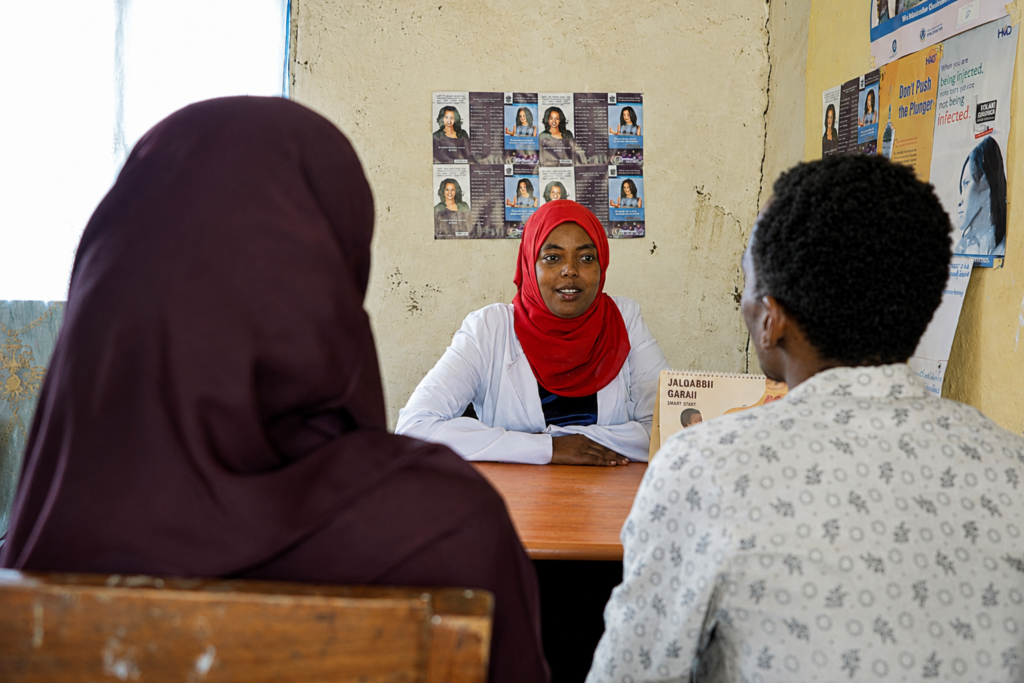
Wube’s story reflects broader changes happening through the Smart Start program in Ethiopia. In 2025 alone:
- 121,256 adolescent girls and young women aged 15-24 years adopted contraceptive methods through the Smart Start model.
- 364,975 received counseling through Smart Start pathways.
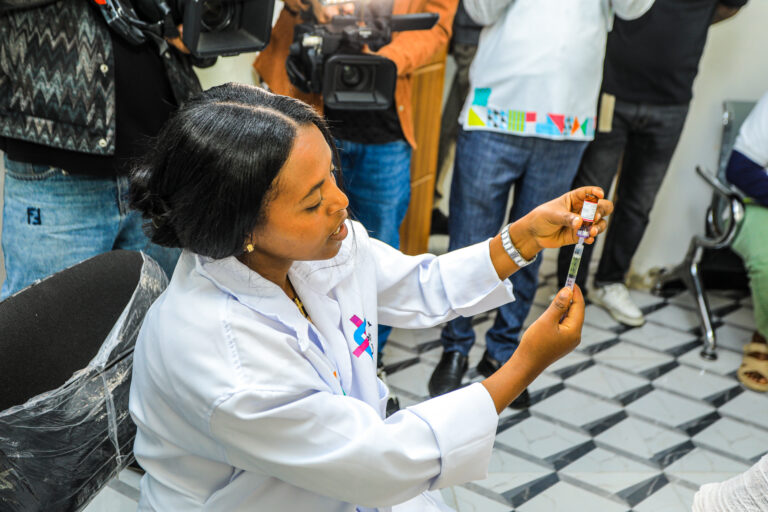
- Through program support, 47,109 girls attended their first antenatal care visits, while 124,690 attended postnatal care services.
- Additionally, 37,957 pregnant girls and young women benefited from skilled delivery services, with 77% of those who delivered adopting immediate postpartum family planning methods.
But beyond the numbers, Smart Start is helping shift how couples approach decision-making, communication, and future planning. Wube’s story reflects the power of centering couples’ lived realities, economic aspirations, relationship dynamics, and social pressures in health programming.
By connecting reproductive health to the economic realities and aspirations of young families, the program demonstrates that meaningful and sustained change happens when women and couples are supported to plan their futures on their own terms.