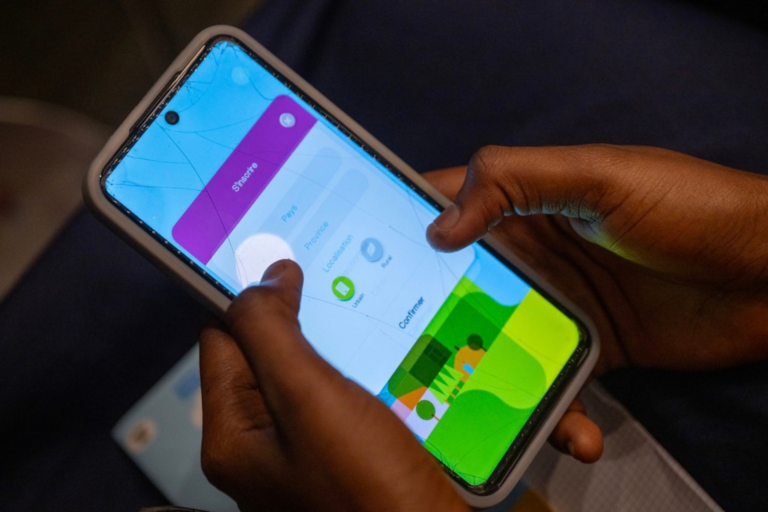
Today, your phone can answer almost anything. Questions about dinner recipes, travel recommendations, research citations — questions that once took real time and effort are now resolved in seconds.
But for millions of people, answers about their own health remain out of reach. In an age when AI can recommend your next binge-watch or plan your vacation itinerary, access to reliable health information and care still falls dangerously short for too many.
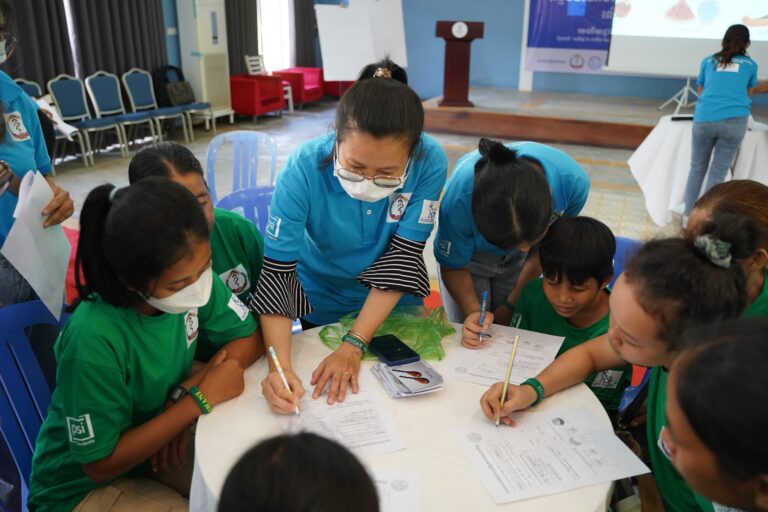
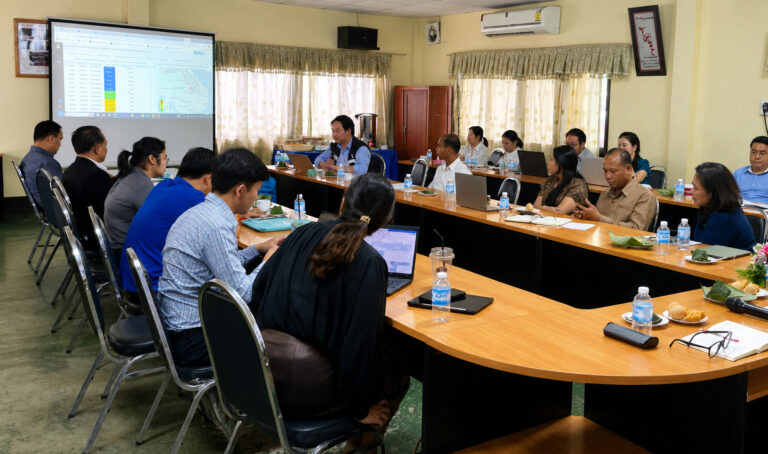
To bridge this gap, PSI is partnering with governments across Africa to implement and scale digital health tools that put accurate, personalized health information directly in people’s hands. From health chatbots to AI-enabled digital companions, these tools are creating effective, more accessible pathways to trusted information —giving people a private place to ask questions they may not feel comfortable asking in person—while helping people navigate services and find the support they need to stay healthy and safe.
Here are some of the chatbots powering access to reliable health information and shaping the future of digitally-powered care.
Jali: strengthening access to health information in Kenya during the Ebola outbreak
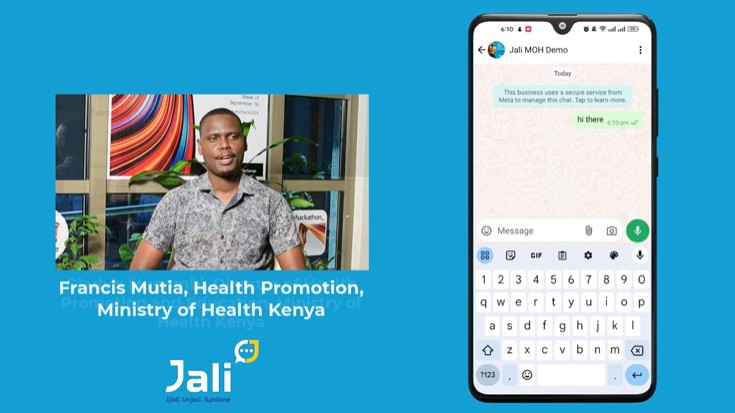
COVID-19 was a stark reminder of how deadly health misinformation can be. In response, PSI partnered with the Kenya Ministry of Health in 2023 to launch Jali — a WhatsApp-based health chatbot offering credible, on-demand health information to over 150,000 users across Kenya. During the pandemic, there were 1 million interactions on Jali, giving people accurate answers about how to get tested, seek care, and protect those around them.
In 2025, we explored what else Jali could do. We partnered with Microsoft and Intellisoft to develop a prototype AI integration for Jali, designed to make it a smarter, more adaptable tool that could respond to the full range of health questions Kenyans face every day. Ultimately, the AI functionality did not go live, but the prototype gave us a way to test how AI could build on a platform people already knew and used. As Glady’s Mugambi, Director of Health Promotion and Education at the Kenya Ministry of Health, put it:
“With Jali, we are not only sharing information on what is going on, but we are also empowering Kenyans to take control of their health.”
That trust proved critical when Ebola outbreaks emerged in Uganda and the Democratic Republic of the Congo. Rather than waiting for misinformation to spread, the Kenya Ministry of Health used Jali to proactively share accurate updates on the risk level and steps communities could take to stay safe. With COVID-19, misinformation cost lives. With Jali, Kenya was ready.
Coach Mpilo A : a digital self-care tool supporting people living with HIV in South Africa
More than 2 million men living with HIV in South Africa are not on treatment. Research tells us this is not about men being indifferent or apathetic, it is about the fear and stigma surrounding HIV that keep men from seeking out testing and treatment.
That’s where Coach Mpilo comes in. In partnership with the Gates Foundation and Matchboxology, PSI created Coach Mpilo: a highly effective peer support model that trains men who are living well with HIV to be ‘coaches’ of men facing practical and psychosocial barriers to care.
Despite its success, the scale of Coach Mpilo’s peer support program was limited by the number of people able to serve as coaches. So we asked a different question: could we bring the most essential elements of Coach Mpilo — a safe, relatable source of information, and a warm bridge to in-person care — into a digital format that could reach anyone, anywhere?
The result is Coach Mpilo AI, a WhatsApp health chatbot designed for people in South Africa seeking confidential support on sex, relationships, HIV, TB, mental health, and overall health and well-being. Built in partnership with Audere, Matchboxology, and Wits Health Consortium the tool aims to do what the original model alone cannot: reach anyone, anytime, at scale, extending the reach of the health system, enhancing access to care, and relieving pressure on healthcare providers.

Coach Mpilo AI has been embraced by users and health providers alike: “The clinic does not always have time to teach you,” one user said, “Coach Mpilo teaches you. If you do not understand something, the coach explains it.” Another added: “I had a problem I didn’t know how to express, but now I feel able to deal with it.”
As digital tools like Coach Mpilo create new ways for people to seek information and support, providers are also seeing changes in how openly people communicate about their health. One nurse shared, “Some would say they couldn’t come out openly about their health concerns. But now they can talk freely. They can speak about anything they want to speak about.”
In its first seven months, Coach Mpilo AI has already reached more than 100,000 users, facilitated over 200,000 conversations, and partnered with 3,400 health providers across 161 clinics in South Africa. By supporting people with health information, screening, psychosocial support, practical reminders, connections to in-person care, and referrals to other sources of care, Coach Mpilo AI meets people where they are with the health resources they need. Learn more about Entraîneur Mpilo.
Nurse Lina: a sexual and reproductive health resource for women in Uganda
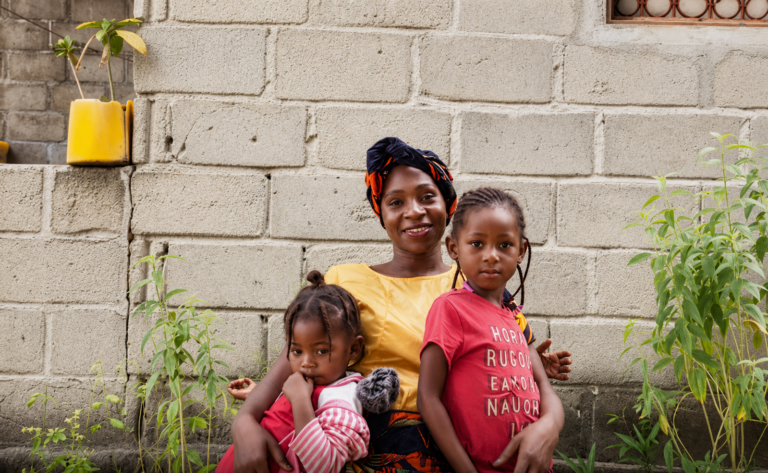
For many women in Uganda, getting reliable information about sexual and reproductive health (SRH) means navigating stigma, misinformation, and limited access to services. Nurse Lina is designed to change that. A WhatsApp-based AI chatbot developed by PSI Uganda, Nurse Lina offers women a simple, private, and judgment-free way to get accurate information about SRH on a platform they already use.
What makes Nurse Lina effective is not just what it knows, but how it communicates. The chatbot explains contraception options clearly — how each method works, what side effects to expect, and what to do next — while actively addressing the myths and fears that often prevent women from seeking care in the first place. Because the conversation is private, women can ask questions they might feel too shy or judged to ask in a clinic.
Nurse Lina also bridges the gap between information and action. After hearing her options, the chatbot connects women to a nearby trusted health facility so she can access services quickly and easily. For many users, this makes the difference between knowing their options and actually using them. In a setting where stigma and access barriers are real, Nurse Lina meets women where they are and supports them on the rest of their SRH journey.

OKY: supporting menstrual health in Côte d’Ivoire
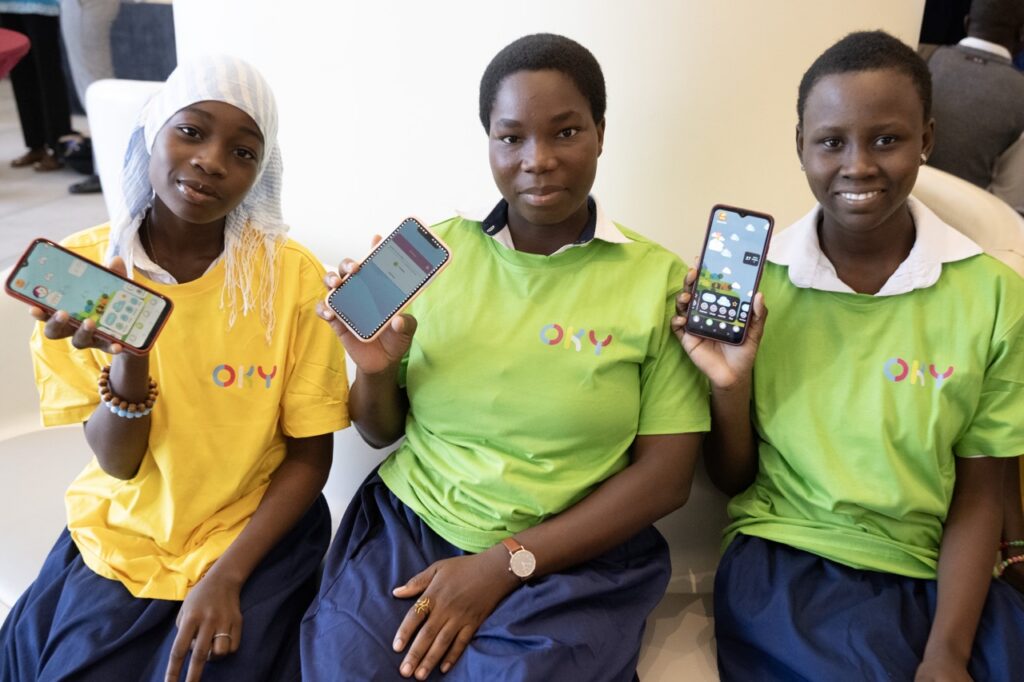
For many adolescent girls in Côte d’Ivoire, navigating menstrual health can feel limited by stigma and misinformation. Developed by UNICEF and launched this June in Côte d’Ivoire in partnership with PSI, OKY is a free, confidential mobile app that helps young girls track their menstrual cycles, understand how their periods affect their body and mood, and access reliable information on puberty and SRH. Built in partnership with girls, for girls, it uses educational, relevant content that is accessible even to first-time smartphone users. One user said, “In Africa, menstruation is considered taboo, but the Oky app comes as a lifesaver, providing us with accurate and essential information about our menstrual and sexual health.”
More than a tracking tool, OKY gives girls the knowledge and confidence to manage their menstrual health on their own terms and in their own time. At a time when period stigma and misinformation remain significant barriers to girls’ education, confidence, and well-being, OKY offers a trusted, private space where girls can ask questions, understand their menstrual cycle, and feel less alone. The official launch in June, chaired by the Chief of Staff of Côte d’Ivoire’s Ministry of Health, signals strong government commitment to putting digital technology at the service of adolescent girls’ health and well-being.
Looking forward
Technology is moving fast and we are working to make sure access to health information keeps pace. Chatbots will never replace the value of in-person care, but they are a powerful tool for strengthening the pathways that connect people to health education, credible information, and services they can trust. AI can make health information easier to reach, but technology is not the end point. Trusted information, human oversight and connections to care remain essential to helping people make informed decisions about their health.
Alongside our partners, we will keep building digital health tools that put people and communities first. Because no matter how someone prefers to access care — a hospital, a clinic, a community health worker, or a WhatsApp message — everyone deserves information and care that is accurate, accessible, and free from judgment.
In a world where your phone can answer almost anything, it should be able to help you stay healthy too. That is the future we are building.
Want to learn more about our capabilities?