

WHO & PSI WEBINAR SERIES
Innovate . TEST . Integrate
Transforming Testing and Service Delivery: Quality, Integration and Innovation in a Changing Global Health Landscape


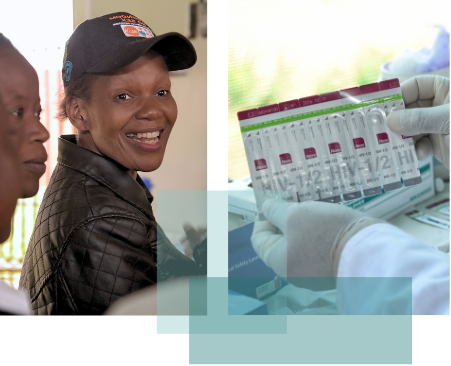
Building on the 2025 WHO–PSI webinar series Test, Adapt, Deliver: HIV Testing Services in a Shifting Landscape, this new series broadens the focus to the next generation of testing and service delivery across HIV, viral hepatitis, STIs and TB.
Across four sessions, WHO, PSI and country partners will explore how programs can expand access, safeguard quality and adapt to a rapidly changing global health environment. Topics include new uses of HIV self-testing to increase reach, efficiency and sustainability; hepatitis C self-testing as part of national elimination efforts; quality management systems for diagnostic and testing services; and the use of artificial intelligence and digital technologies to strengthen HIV, viral hepatitis, STI and TB programs.
Access additional self-testing resources and publications
UPCOMING WEBINARS
Each webinar will combine the latest WHO guidance and tools with real-world country experience, implementation learning and perspectives from communities and partners. The series is designed for policymakers, programme managers, implementers, providers, researchers and technical partners looking for practical ways to make testing and prevention services more accessible, efficient, integrated and resilient.
Each session will be conducted with simultaneous interpretation in English and French.
Scaling What Works: The Role of Self-Testing in Reclaiming HCV Elimination Goals
Thursday, 15 October 2026 | 14:00–15:30 CAT
This webinar presents findings from a coordinated multi-country implementation research programme on hepatitis C virus self-testing (HCVST), supported by Unitaid and conducted in partnership with WHO.
Continue reading
It aims to synthesize real-world evidence on HCVST feasibility, acceptability, reach, and linkage to care across five diverse settings, and to draw strategic lessons for countries considering or scaling up HCVST as part of national hepatitis elimination efforts.
Globally, only 36% of people living with HCV know their status, and just 20% have been treated. Reaching the undiagnosed, particularly among people who inject drugs, men who have sex with men, sex workers, and people living with HIV, requires testing approaches that overcome stigma, structural barriers, and geographic distance from services. The evidence presented in this webinar directly addresses whether and how HCVST can contribute to closing these gaps as well as reflects on what is needed next.
HIV Self Testing for Greater Reach and Efficiency. New use cases and evolving options within HIV testing algorithms
Thursday, 29 October 2026 | 14:00–15:30 CAT
Continue reading
Quality Beyond the Laboratory: Introducing the WHO Multi-Disease Serological Testing QMS Toolkit for Non-Laboratory Settings
Thursday, 19 November 2026 | 14:00–15:30 CAT
Decentralization of testing and task sharing have been critical to expanding access to diagnostics. As testing services extend beyond laboratories, ensuring quality across all settings and providers, including trained lay providers, has become increasingly important.
Continue reading
From Guidance to Action: Using AI to enhance HIV, Viral hepatitis, STI and TB programs
Tuesday, 24 November 2026 | 12:00 – 13:30 CAT
Artificial intelligence is moving from pilot projects to real programme use across HIV, viral hepatitis, STI and TB services, from chatbot-supported testing and counseling to computer-aided screening and risk-informed outreach.


